Showing posts with label atheism. Show all posts

Thursday, 6 June 2013

Why Having Religious Friends as an Atheist is Awesome

Standard Atheist/Theist Discussion.

David Hume was not a fan of the ol' faithful.

His controversial stance on religion led him to be very nearly charged with infidelity by the Church of Scotland, and he was a vocal opponent of anything that he deemed to be overly 'clerical' in society. He ripped the Argument from Design into very small chunks with his posthumous Dialogues Concerning Natural Religion, and his views led him to be denied a career as an academic, forcing him to make a living as an essayist.

Yet Hume was also a very amicable fellow. His friendly nature and disposition led to him being nicknamed “la bonne David” by his friends in France, many of whom were in fact priests and other religious figures. Where he saw views and issues he was willing to make his argument heard and call out what he disapproved of, but he could also maintain friendships with those who held differing opinions from himself despite this.

Now, Hume was likely not an atheist: philosopher Stewart Sutherland places him on the scale of belief as a sceptic and possible agnostic. But that doesn't mean that we atheistic types cannot learn a thing or two from his stance towards theistic friends and acquaintances. The ability to denounce what we see as wrong or dangerous yet also maintain our candour is something I do feel is lost sometimes on modern atheists: there does seem to be a bit too much of “you're stupid, your opinions are stupid and I don't talk to stupid people” going around, rather than the more amenable “your stance on that issue is pretty fucking stupid I've got to say, and here's why I think so. But hey, how 'bout them Lakers?”

Talking religion with atheist friends when you yourself are an atheist tends to just turn into an echo-chamber; of course no-one's going to disagree or put forth an alternative, you're all on the same wave-length. Introduce a friend who's of a religious persuasion, however, and now you've got yourself a discussion on the go. Nobody learns anything by nodding along and agreeing with each other: we learn through debate, through rational discourse and discussion. You're probably not going to sway many hearts and minds, but it will teach you how to better express your viewpoints, and it could well teach you a thing or two about what you truly think as well.

Being able to defend your ideas under fire really focuses your mind on what those ideas are.

I'm not saying go out and get chummy with a Pentecostal or a Young-Earther (not unless you like a challenge, or rigorous debates with brick walls), but most religious folks aren't of the extremist persuasion: they're just regular people like the rest of humanity who hold beliefs contrary to your own. Misguided beliefs in your mind, sure. Hell, maybe even stupid beliefs. Just remember that you could be wrong, and that they probably think the same of you. Nobody wants an echo-chamber, at the end of the day. Echo-chambers are dull as shit, unless you know a really good ventriloquist.

Having friends you can properly debate against, though? They're worth having.

Sunday, 5 May 2013

This Week in Atheism, Religion and Scepticism – 05/05/2013


THIS WEEK IN ATHEISM AND RELIGION...

It's not often you get to hear good news coming out from the 'ex-gay' movement (the guys who claim that homosexuality is some sort of illness curable by Jesus, or what have you), so this story is one I'm happy to be writing about. John Paulk, the poster boy for this particularly noxious movement and founder of the Love Won Out ministry, has issued a formal statement revealing that he is still gay and denouncing the idea of gay reparative therapy. His statement doesn't pull any punches: Paulk seems keen to distance himself from the movement he was once so closely associated with and is quoted as saying “I do not believe that reparative therapy changes sexual orientation; in fact, it does great harm to many people.”

To come out like this, to admit you were wrong about something you once defined yourself by so strongly, takes a lot of courage, so hats off to Mister Paulk. Gay reparative advocates will be going full damage control on this one, but this revelation has struck a serious blow to their credibility.

Not that they had much to begin with.

-

If only all friends were as awesome as the one featured in this story. Alexis Smith is suing the Northwest Rankin High School on behalf of a friend, whose age means that she has to sue through someone who is legally an adult. The school, through the influence of a large evangelical Baptist Church called Pinelake that has managed to gain a lot of sway in the Rankin County School District, brought about an assembly that What Would JT Do? describes:

“The school did not tell students in advance what the purpose of the assemblies were, nor did it allow them to opt out. All three assemblies consisted of the same Christian video and presentation. The focus of the assembly was how the students could find “hope” in Jesus, since they couldn’t find hope elsewhere... One senior recorded the entire assembly on a cellphone. Faculty and parents stood by the door to the room where the assembly was held, preventing students from leaving. Several students actually did try to leave, and were told to sit back down by the school’s truancy officer. The assemblies all ended with a group prayer.”

Fans of the United States constitution might currently be gesticulating wildly at the First Amendment and making angry noises, and you'd be damn right to do so. Hence why it's awesome that more people are beginning to take a stand on this issue. Religious groups have no grounds to pull this sort of stunt, and so the more people call them out and challenge them on it the less likely they are to attempt it.

Kudos to the unnamed student for raising this important issue, and major kudos to Smith for being so willing to stand by a friend when they need support. This sort of action makes a difference.

THIS WEEK IN SCEPTICISM...

The libel suit against author and scientist Simon Singh by the British Chiropractic Association has become the stuff of legend amongst sceptics the world over; the BCA's attempts to silence criticism through legislation backfired massively and led to a huge surge of support for Singh that ultimately trigger a change in the libel laws of Britain. It was a great example of reason and evidence stepping into the arena with pseudoscience, and even Britain's shitty libel laws couldn't help the proponents of nonsense.

But I don't think everybody realises just how massive a gamble Singh took when he decided to fight this case. Fortunately Nick Cohen of The Spectator does, and he can tell you all about it in this article. It contains extracts from Cohen's You Can't Read This Book, which sums up the whole thing brilliantly so I'll just go ahead and quote it here:

After hearing the judge’s ruling, Singh’s friends, his lawyers and everyone else who had his best interests at heart advised him to get out of the madhouse of the law while he still could. He had already risked £100,000 of his own money. If he fought the case, it would obsess his every waking moment for a year, possibly longer, and he could lose ten times that amount if the verdict went against him. Even if he won, he would still lose, because another peculiarity of the English law is that the victor cannot recoup his full costs. It was as if the judiciary had put Singh in a devil’s version of Who Wants to be a Millionaire?...

...No one would have blamed him for backing down. There would have been no dishonour in withdrawing from the fray. Thousands of publishers and writers in England and beyond have looked at the cost and biases of the English law and thought surrender the only option. Singh said that if he were a twenty-five-year-old with no money he would have apologised. But his bestselling books had given him financial independence. He resolved to refuse to put his name to a lie by authorising an apology. He knew what his enemies would do with it. Ernst and Singh had spent years investigating alternative medicine. No potential patient would spend more than a few days doing the same. If he apologised, chiropractic therapists would wave his retraction at potential patients, and say that Singh had admitted that their philosophy was not gibberish, and their claims to treat children were not bogus. As shamefully, an apology would also make Singh complicit in silencing other journalists, scientists and editors, who would think hard before challenging alternative therapists after seeing how the law had forced him to retract.”

So Simon Singh fought the case, even with the looming threat of losing and having the pants sued off him by the BCA. And he won; the outpouring of support for his cause and condemnation for the despicable attempts at censorship by the BCA was massive. Their attempts to justify their beliefs were torn apart by bloggers and medical journals. Petitions in support of Singh and against the libel laws were launched. Over 500 separate complaints against chiropractors within one 24-hour period, and that later rose to a quarter of all British chiropractors. In short, it was a catastrofuck for every chiropractor in the UK; as one of them put it, “suing Simon was worse than any Streisand effect and chiropractors know itand can do nothing about it.”

Singh seems like a pretty modest man; from the way Cohen describes it he's not keen to be put on a pedestal. Nonetheless he stood his ground and fought a case most would have run from, and in doing so helped change the laws of Britain for the better, so I agree with Nick Cohen in saying he does deserve all the praise he gets for this case.

That's all for this week in Atheism, Religion and Scepticism, folks. See you next time.

Friday, 3 May 2013

Does Religion Poison Everything?


Let's start with a disclaimer.

I'm a big, big fan of the Hitch.

Books like God Is Not Great were sources of information and inspiration to me when I first came to identify as a non-believer, far more so than any works by Dawkins or even Dennett, so it's safe to say that the late and great Christopher Hitchens remains someone I admire to this day. I'm not keen on hero worship, but he'd be a strong candidate if I was. I sure as shit didn't agree with a lot of his politics, but I greatly respected his willingness to speak up on matters he considered important, and to hold to his beliefs even when they made him unpopular.

So yes, big fan of the Hitch, love his work, miss his insights on matters.

I still cannot help but disagree with him on one of his major arguments, however.

What I'm referring to is this idea put forward in the very subtitle of God Is Not Great, “religion poisons everything” (unless you live in the UK like me, in which case the subtitle had to be changed to “the case against religion”, likely due to the bullshit libel laws of the time). You might say that this was just a catchy little phrasing used to garner attention to the book, but it comes up frequently throughout and is referenced in many of his speeches (which are master-classes in oratory skill, by the by, and you should watch as many as you can get your hands on).

Hitchens liked to cause a stir, to trigger debate and discussion, and this could partly account for what he was trying to achieve with this statement. But I do believe that he thought there was merit in this idea of religion as the source of the world's problems and issues.

Yet the tutor for my dissertation this year (writing on the topic of non-belief in early twentieth century Britain), a man I have come to admire and respect considerably, who has aided me time and time again and provided considerable support with what was a difficult task to complete, is a deeply religious man. He holds convictions that are completely different my own, but this did in no way poison the rapport we built up over the last year or the help me gave to me; if anything my dissertation benefited from it, for he offered a different insight onto the matters being discussed, something that I could never hope to provide.

Religion causes problems, yes. I don't think anyone could look at some of the events occurring across the globe today and come to any other conclusion. Does it cause all the world's problems, though?

No, it doesn't.

Christopher Hitchens was on to something with this idea of religion poisoning everything; I just think he needed to go a step further. Ignorance is what we should all be concerned by, whether we are religious or not, for it is the root cause of many of the world's current predicaments. Religion can indeed be considered an off-shoot of ignorance, but not always. To say that religion has had absolutely nothing of value to contribute to the world would be an over-statement so massive you'd be able to see it from orbit; the great Islamic nations of the Middle Ages helped to preserve texts of antiquity, and anyone who sees nothing beautiful or inspiring about a centuries-old Cathedral, steeped in history and a monument to ages past, needs to have their heads examined.

This isn't a criticism of Hitchens, and I am not another parasite in the guise of a commentator scuttling out from the shadows now that he is unable to retort to leech of his reputation and memory. This is merely a disagreement. I'd like to think that atheists are capable of respectfully disagreeing with one another, of debating matters that are important to us all.

We can disagree about things but still respect one another, and that's exactly how I feel about Hitchens on this topic.

Saturday, 27 April 2013

I Might Be Wrong

I haven't had the chance to use this awesome gorilla image in a while. So it's going here.

“The fundamental cause of the trouble is that in the modern world the stupid are cocksure while the intelligent are full of doubt.”
- Bertrand Russell, The Triumph of Stupidity

I talk about a lot of things on this blog, and it does seem like I've made my mind up about them.

When it comes to matters of religion, you can probably tell that I do not believe there's some omniscient bearded dude watching over us all, who made this world and is now so bored he takes an active interest in every single person currently drawing breath. Nor do I believe in any other manner of deity or deities floating about in the ether. I see no evidence for it, and so to me it makes no sense. Similarly you'll hear me discuss views most would label 'conspiracy theories', and again I don't believe it. They rely too much on logical fallacies and conspiratorial thinking in the place of solid, quantifiable, verifiable evidence, and so I place little value in them.

These conclusions that I have reached about such matters were a long time in coming; I do my best to consider these things as best I can before I make my mind up about them. But make my mind up I did.

I don't believe that god exists, organised religion really isn't for me and I reckon that anyone who starts spouting off about how the Jews were responsible for 9/11 is talking shit.

Here's the thing, though.

I could be wrong about these things.

Perhaps tomorrow some guy claiming to be Jesus will reveal himself to the world, and will be capable of feats that are little outside the laws of reality and that meet old David Hume's definition of miracles. Or perhaps Tim LaHaye's apocalyptic novels will prove to be decidedly non-fictional, and overnight we'll be left in a post-Rapture world (I can't help but think that The Thinking Atheist has a point about the wonders this would do for the globe, but there you go). Maybe tomorrow an alien spacecraft will be sighted floating over a major metropolitan area, and for once the vast number of phones that can record HD footage will come in handy by actually capturing some solid video of the damn thing.

Certainty is a concept I distrust greatly, and so I have to be honest enough with myself that even my most cherish views and beliefs could be false. I can't help but notice that the guys who deal in absolutes? You know, the ones who are totally and completely certain about the things they're espousing?

Yeah, I can't help but notice that they're the sort of folk who scare the shit out of me.

Sunday, 21 April 2013

This Week in Atheism, Religion and Scepticism – 21/04/2013


Been a while since I worked on a consistent weekly segment for this blog, so I thought it was high time I got something started up again.

My idea for the 'Sunday News Round-Up' is for it to pretty much do what it says on the tin: every Sunday I'll post links to some news articles relevant to topics this blog covers, along with a bit of analysis and discussion from me. I'll break them down by topic, articles relating to atheism and religion in one, articles relating to scepticism in the other.

Right then, let's get this show on the road.

THIS WEEK IN ATHEISM AND RELIGION...

Shirley Chaplin, Gary McFarlane and Lillian Ladele are back in the news this week, as they're appealing the decision made by the European Court earlier this year. You might recall these three as the guys who complained that their employers were discriminating against them on religious grounds; Mrs Chaplin is a nurse forbidden to wear a cross at work, whilst Mr McFarlane and Miss Ladele are a relationship and marriage counsellor respectively who refused to work with homosexual couples. The former lost his job over it, whilst the latter is claiming that her employers making her work with gay couples would be discrimination.

All the rulings against them were held up in the European Court of Appeals, but now they're back decrying unfair treatment, double-standards and further discrimination against Christians. I do feel a bit sorry for Mrs Chaplin, I must admit; she had been wearing her cross (not exactly a big deal) for thirty years when she was asked to remove it on health and safety grounds, and she did actually offer to modify it so it did not only for this to be refused. The other two I have no sympathy for, however. We're reaching the stage were gay couples are finally starting to gain the right straight couples have solely enjoyed for far too long, and these kind of people can scream that they're not homophobes until Hell freezes over: if you are refusing to work with such couples based solely on their being gay, that's actual discrimination based upon sexual orientation.

---


Yeah, me neither.

Carla Hale, who had worked at Bishop Watterson High School for nineteen years, had her post terminated because her homosexuality is “a violation of moral law”. No, seriously. That's apparently their reasoning for this bullshit move. I never cease to be astounded by the fact that these people still think they can get away with this sort of thing still. Either way, a shitstorm is brewing, the school is under heavy scrutiny and Hale, who very kindly says that all she wants is her job back, is nonetheless pursuing legal action against the school for it's blatant discrimination against her. She's going to win, there's no doubt about it; the school diocese has no justification for the stunt it's pulled.

---

And finally for this section some news closer to home for me: a poll in Scotland by the Sunday Times and Real Radio Scotland shows a sizeable decrease in the number of people saying they belong to the Christian faith. This stands in stark contrast to an earlier poll in 2001, which had 65% of respondents saying they were Christian; in this new poll it's dropped to 55%, and those stating that they have no belief in god has risen from just 28% to 39%. Good news all round, by my standards. The National Secular Society, whose analysis of these numbers I'm politely pinching, points out that many people tend to overstate their religious tendencies in these polls, so for all we know the changes might be even larger.

The poll results are available online; you can check them out here.

THIS WEEK IN SCEPTICISM...

Anyone remember Andrew Wakefield? The former doctor who kicked off the whole MMR vaccine controversy with his fraudulent 1998 paper that linked the vaccine to autism? Who was using his paper to try and trick the government into using a medical test he had the patent for?

Yeah, well the asshole's back in the news again this week.

In the wake of the reports about Measles spreading in south Wales this month, Wakefield is using this outbreak as an excuse to remind us all that he sadly hasn't stopped breathing and to blame the British government for the whole thing. Yup, the man partly responsible for the deaths of untold numbers of infants because he scared their parents away from vaccines is once again trying to redirect the blame on everyone but himself. Professor Andrew Finn, a specialist in childhood vaccines and an actually credible source of information on these matters, has denounced Wakefield's statements as, and I do quote, “balderdash”:

“His proposal for single vaccines was not based on any observations in his published paper. It came straight out of his head. There has never been any evidence it would have made any difference.”

Wakefield has been struck from the medical record and has fled to the USA, where he continues to perpetrate his particularly noxious brand of bullshit.

---

If you follow vjack's blog Atheist Revolution, you might remember a post about how you should really reconsider using the Huffington Post as a reliable source of information. Well, please allow me to further stress this point by looking at another article in which HuffPo gives credence to pseudoscience and nonsense over critical thinking.

Specifically this one, in which it gives a soapbox to a group led by New Age woo-peddlar Deepak Chopra who are complaining about TEDx removing pseudoscientific videos from its blog.

Please note that TEDx is not the actual Technology, Entertainment and Design conference; parapsychologists like Rupert Sheldrake, the removal of whose talk Chopra and his friends are protesting, would never manage to get a platform there, due to them actually having standards. TEDx conferences are third-party conferences that license the TED brand in order to gain more attention, but they often don't have the standard of entry their parent group does. Nonetheless, the misuse of the brand can have negative effects on the parent company, and nothing damages ones credibility as a solid source for science than allowing a herd of quantum woo-types to use your name to add much-needed credibility to their ideas.

Thus TED, a private organisation that is free to add or remove whatever it wishes from its blogs, removed their links to several videos of such talks from their site. The videos are still available; they've not been wiped from the internet, so any claims of censorship or a cover-up is nonsense. Chopra and his ilk just seem to get upset when people try to hold their claims up to the same standards as everyone else in the scientific community, and Ariana Huffington is only too happy to offer him a highly visible spot to complain about it from.

That's this week in Atheism, Religion and Scepticism, folks. See you next time.

Sunday, 14 April 2013

On the 'Redefinition of Marriage'


Of late this blog has been taking more of a sceptical bent, intermixed with a bit of light-hearted discussion of religious themes in media and the like.

So it really is high time I gave the religious hornet's nest a good boot and see what stirs up in response.

Let's talk gay marriage.

As vjack pointed out recently, we do seem to be reaching an apotheosis in modern culture when it finally starts to dawn upon people that marriage should be something people have a right to irregardless of their sexuality. Recently Uruguay's congress passed a bill legalising gay marriage in their country with over two-thirds of their lower chamber in support, and just yesterday France's upper house of parliament approved a similar bill. Times are indeed a-changing, with similar legislation all across the globe being proposed and debated.

Now I'm sure that somewhere there exists a non-religious person who is against gay marriage. These things do happen, after all. It's just that I can only think of one individual who fits this description; overwhelmingly, those who oppose the right of a gay couple to get married do so on religious grounds. That's not to say that everyone of a religious mind is against this issue, since some of the most passionate supporters for this cause that I know are also very religious.

All manner of arguments and reasoning are fired back and forth when it comes to this subject, from advocates stating its a civil right to opponents denouncing it as unnatural. There's a whole range of shitty reasoning and logical fallacies being peddled in this debate, and sadly I don't have time to go over them all here. Instead I'd like to focus in on one particular argument being used against gay marriage. It's one of the arguments I hear most frequently when this subject comes up, both in conversation with others and in speeches by government figures.

I'd like to focus on the idea that supporting this movement is to support a “redefinition of marriage”.

Now commonly on my side of the debate (hazard a guess as to which this might be) the response to this assertion is that allowing gay marriage is not a redefinition, but I'm going to take a different approach. Let's say, for a moment, that allowing gay people to get married is indeed redefining the way in which marriage is outlined in law.

Now please explain to me why this is a bad thing?

As society changes, so do the laws. So does the language. As our concepts of morality and fairness change, the way in which we legislate such matters adapts accordingly, as does the way in which we speak. Forty years ago women were viewed only as housekeepers and other notions we'd find extremely outdated now. Sixty years ago and the idea of civil rights would have been laughed at.

Laws change. And to say that in allowing gay people to get married we'd be “redefining it” is to ignore the fact that marriage has been redefined many times before.

Christians themselves will tell you that the Bible does not actually define marriage as “one man, one woman”; that seems to be something we've added more recently. In the past, it's worth noting, marriage was a political thing as well, a means of securing alliances between families and extending one's influence. Love didn't really factor into it all until far more recently. Thus this notion of marriage as a bond between a loving couple (in this instance, one male and one female) is just one more change a long list of edits and revisions to how we define the concept of marriage.

So perhaps opponents of this movement are right in saying that we are attempting to redefine marriage (I'm not saying for certain they are, let me stress; this post is more of a thought exercise than anything else). I fail to see what the issue with this is. Laws and language are redefined every single day, and that's a good thing. If these things do not change with the times they will become stagnant and outdated, no longer relevant to the times, which is something the laws our society is governed by can never afford to be.

At the end of the day, it will forever baffle me why this issue matters so much to people. You don't want gay marriage? Don't fucking get one, then. Marriage is a civil right, and there's no religious monopoly on it.

Why the hell should one group get to decide for everyone who can and cannot get married? That doesn't strike me as terribly fair.

Friday, 5 April 2013

Religious Themes in Video Games: BioShock


And we're back for round two of this series on video games that discuss religious themes, chums. Just as a reminder these posts do contain some spoilers, so if you're not wanting anything revealed about these games I would recommend not reading further.

Otherwise, let's get started.

BioShock


BioShock is widely considered to be one of the greatest games of the last decade or so, and easily ranks up there as one of the best games period. A claustrophobic, creepy and extremely clever first-person shooter, it's a game that isn't afraid to be about something, to tackle big themes and issues in a mature, thoughtful and fascinating way that only an interactive experience can provide.

For those of you who've not heard of it, BioShock is for the most part a thinly-veiled satire and criticism of Ayn Rand's 'Objectivist' philosophy, which means that, for the most part, it's a game about philosophy and politics. Set in the Atlantic Ocean during 1960, it takes place in an underwater city created by a man named Andrew Ryan (like I said, thinly-veiled) as an Objectivist paradise. Ryan pursued this dream to the letter, aiming for a city where “the great would not be constrained by the small.”

All good on paper, but by the time the player arrives in this city, it's all gone to shit.

Oh, and the city is called 'Rapture'. Here's where religious elements come into play.

BioShock covers the topic of religion on several levels. On the surface there's the usual name-dropping and references; the name of the city itself is an obvious one, and the Biblical creation myth is referenced with ADAM, a plasmid that allows the residents of Rapture to perform superhuman feats... but is also highly addictive and the cause of many being transformed into monstrous beings called 'Splicers'. These Splicers, in addition to being creepy as all hell, can often be heard reciting biblical passages and singing hymns as they stalk the flooded halls of the dying city.

But this is just surface-level commentary, and BioShock isn't content just to stop there. It seeks an active, deeper discussion about religion and its many aspects, something one rarely finds in video games. Andrew Ryan is an atheist who seeks an Objectivist utopia, and it is made clear that he considers religion, particularly organised religion, an obstacle to this; in his introduction to Rapture he names the Vatican specifically as an enemy of his cause, depicting it as a thieving entity out to steal the toils of hard-working men in the name of god.

As such, religion is an unwelcome concept in Rapture, with holy books like the Bible banned. Yet despite its lofty ambitions, things don't quite go to plan; a two-tiered society begins to emerge in Rapture, the privileged with access to the incredible discoveries found below the sea, free to pursue their dreams and ambitions without oversight or restraint, and the less-privileged; the underclass who toil away to ensure the city continues to function, and who are repeatedly fucked over by Ryan's laissez-faire attitudes and desire for a society resembling an individualist's wet dream.


Blocked from gaining access to many commodities through legal means, a culture of smuggling flourishes amongst Rapture's underclass, and it becomes apparent that one of the items most commonly smuggled into the city are bibles; one can find them strewn around the city, particularly in the slum regions, and several audio recordings discuss them being brought in illegally. Ryan, naturally, is incensed, bringing in the death penalty against such smugglers whilst declaring that “any contact with the surface exposes Rapture to the very Parasites we fled from”, once again showing his vitriol towards religion and the religious institutions existing on the surface above (amongst other things, admittedly; Ryan has a major bone to pick with the US government and also the Soviets).

Here we see the game discussing issues such as religious persecution, and there's some deeper sub-text to all this that we can interpret. In Rapture, Andrew Ryan and his cohorts sought to create their vision of a perfect society, free from oppression and religion. In this, they failed; faith and religion found a way into the city despite their best efforts, as it provided solace and meaning to an underclass of the population they had failed. Attempts to stop this spread led to Ryan becoming the architect of religious persecution, executing those who smuggled Bibles and other religious idols into the city.

What this game has to say about religion, then, is that it is an intrinsic aspect of society whether one likes it or not; you can take it out of society, but you cannot take away some members of society's need for it.

I consider BioShock to be one of the best games I've ever had the chance to play through, ranking right up there with things like the Half Life series (give us Episode 3, Gabe), and if anything that I've just written sounds at all intriguing to you I urge you to pick up a copy and play it. It's easily acquired for a small price these days, what with two sequels on the market as well now, and I've only scratched the surface with this post in terms of what this game has to say.

It never ceases to amaze me that the game we shall be looking at next was ever even attempted, never mind published. A re-interpretation of a classic religious text, it's by no means the best game in the world but it certainly can be considered interesting.

Until next time, folks.

Sunday, 3 March 2013

10,000 Hits, You Say?

Delicious atheist cake.


So it turns out that Fourth Year of University is far, far harder than I had anticipated.

And I was anticipating it being pretty tough.

I'm neck-deep in research for my dissertation at the moment (a history of freethought in early 20th Century Britain, if you're interested in the subject), so my free time these days is minimal at best. Hence the distinct lack of updates for this blog here.

That's not to say that I haven't been trying to keep up with things online, of course; I've been noticing that charming little hit counter Google gives you to measure your self-worth as an internet pundit slowly trickling higher and higher, and as of today we seem to have hit the 10,000 mark.

Which is pretty cool, I suppose, given that it's just under a year since I started Damned Already.

So cheers for reading, guys, and I hope to get back to properly blogging soon.

Now please excuse me. I have to go and read more fucking books about the impact of spiritualism on freethinker attitudes to history.

Tuesday, 4 December 2012

Bristol University’s Christian Union Bans Women Speakers (unless they have their husbands with them) [UPDATED]


I really, really should be getting on with this essay, but this seemed pretty important to share.

In a reflection of the Church of England’s rather depressing recent decision to block the introduction of female bishops, Bristol University’s highly evangelical Christian Union has elected to ban women from speaking at their weekly meetings… unless accompanied by their husbands. One wonders how many female students in the Christian Union are married?

In an email released by The Huffington Post, president Mat Oliver states …

“It is ok for women to teach in any CU setting... However we understand that this is a difficult issue for some and so decided that women would not teach on their own at our weekly CU meetings, as the main speaker on our Bristol CU weekend away, or as our main speaker for mission weeks.

But a husband and wife can teach together in these.”

Naturally, the shit has hit the fan following this group’s attempts to cater to the more sexist, misogynistic elements of their number, with condemnation pouring in from numerous societies at Bristol University and Alessandra Berti, the Vice-President for Welfare and Equality at Bristol’s Union issuing a statement saying that…

“We have been made aware of a communication from the University of Bristol Christian Union, and we would like to assure our members and the general public that UBU and the full-time elected officers are investigating the issue further in consultation with the groups involved. In particular we will be making certain that our Equality Policy is properly adhered to in all cases.”

Given the nature of a University’s Equality Policy (I confess I’m basing this on the policy at my Student’s Union, though I suspect they’re not much different), Bristol’s Christian Union, who are affiliated with the Student’s Union and therefore subject to its policies, are likely to be in a lot of bother over this one; such policies outlaw discrimination based on (and I quote) “age, disability, gender reassignment, marriage and civil partnership, pregnancy and maternity, race, religion or belief (including lack of belief), sex and sexual orientation.”

All in all, it’s a tad depressing that a Christian Union, which are in my experience usually full of extremely reasonable and intelligent students, would choose to enact such a dated and discriminatory policy, but the criticism that’s pouring in already is pretty heartening. They can only get away with this sort of thing if they aren’t held accountable for it, after all.

I’ll do my best to follow this one pretty closely, and keep this post updated if anything new should occur.

SOURCES


http://bristol.tab.co.uk/2012/12/03/christian-union-gags-female-speakers/

UPDATE:

I think I may have been too quick to simply summarise this story as 'the shit hitting the fan'; an ungoldy fucking firestorm has erupted in the last few hours, with nationally-distributed newspapers running articles on this story.

It seems that the Christian Union in question, despite advertising Facebook and Twitter as services they utilise and despite their accounts being live just a couple hours ago, have chosen to delete both their Facebook and Twitter pages. To be fair to them, this is likely in the face of an onslaught of criticism and denouncements, with the likes of Richard Dawkins chiming in with his condemnation of their activities.

No official statement from Bristol University's Christian Union in regards to this matter yet, as far as I'm aware, but I suspect they're in for a hell of a day when they wake up to all this.

Fun Quotes about Religion (From Some Freethinkers You May Not Have Heard of Before)


Once again the coursework for this year has buried me in an avalanche of chapter drafts, essays and enough books to crush a man, so updates to this here blog have been… sparse, to put it at it’s mildest. Apologies, guys; I’m almost done with my last essay, so hopefully it’ll be back to more regular updates for me once it’s out the way.

In the meantime I’ve been reading a lot of old freethought books and pamphlets as part of my research for my dissertation, which means I’ve come across some pretty awesome quotes from people in the past who also didn’t put much stock in the whole ‘religion’ thing. As a fun little post to get some updates to this blog going again, I thought I’d share some of them with you.

“I cannot follow you Christians; for you try to crawl through your life upon your knees, while I stride through mine on my feet.”
-         Charles Bradlaugh, 19th Century British Politician, Founder of the National Secular Society (NSS)

 “Evolution not only clearly indicates the true place of man in nature, but it dissipates the prevalent illusion of man’s supreme importance, and the arrogance with which he sets himself apart from the illimitable universe, and exalts himself to the position of its most valuable element.”
-         Ernest Haeckel, ‘The Riddle of the Universe’, German Scientist

“I have a very serious quarrel with the anti-Evolutionists… they are throwing dust in the eyes of the people all over America and England by mixing up two totally different things in the scientific world – quarrels about the method of evolution and quarrels about the fact of evolution.”
-         Joseph McCabe, Former Catholic Priest and Key Figure in the Rationalist Press Association

“It is evident that, for the community and the State, the ethical ideas of the citizens are of the very greatest importance, while a man’s religious dogmas should be entirely his private concern.”
-         Fridtjof Nansen, Norwegian Explorer and Nobel Peace Prize Laurette

Friday, 2 November 2012

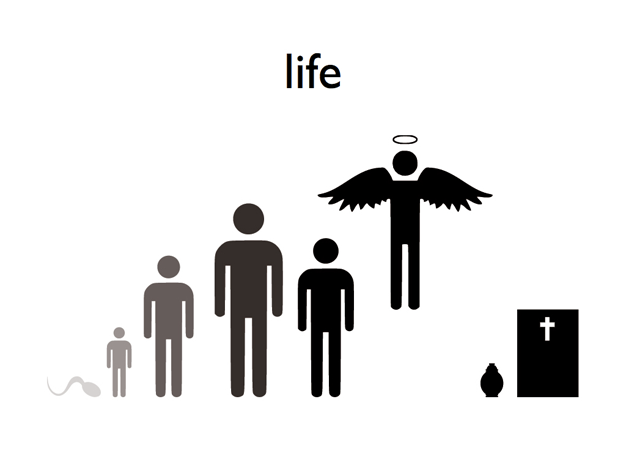
An Atheist on Death


This is going to be a bit of a personal post, folks, just as a head’s up. If that’s not really your sort of thing, consider yourself forewarned.

Still here?

Alrighty, then. Might as well just get stuck in.

Three days ago I was informed that my Great-Grandmother had died at the age of 97.

Such conversations are always unusual, to say the least; you can tell right away that something is amiss. The language they use is always strange, too. No-one says ‘death’ or ‘dead’; it’s always ‘passed on’ or ‘gone’ or ‘departed’. As if the relative in question’s just gone on a trip, a journey to someplace else.

I’m not a believer in any afterlife; when the curtains descend, that’s it. Game over. That's all, folks. No encores, no chance of a repeat performance in another theatre. For 21 years of my life this woman was present, a part of it. Now for the rest of it she will not be.

‘Sad’ is not the best way to describe how I feel about this affair, however, and ‘surprised’ is certainly not the word; gran was telling us for months since her friend died that she was getting rather tired of the whole thing, just a little bit fed up. Not to mention the fact that we’ve known for weeks that she’s not been herself. In the wake of her death, however, I realise something.

97 is no small number.

This was a woman who lived through both world wars. Whose husband served in the Second World War. Who lived a long and genuinely interesting life, her intelligence, determination and unwillingness to tolerate shit from anyone allowing her to do things many women in her time would not normally have been allowed to do. She got to watch her child grow up, marry, have children of his own, grandchildren and even myself, my sister and my cousins after that. She never suffered from any wasting disease, nor some onset of age that reduced her ability to think and reason; for her entire life she was far more intelligent than I ever will be.

We human beings go through life terrified of death and what it might bring; we’ve evolved to the point that we are consciously aware of our own mortality, and quite often it scares us shitless. It leads us to seek comfort in many different ways; lifestyle choices that will help us to live longer, the belief in afterlives and many others.

All of this, stemming from our fear of death.

Yet here was my grandmother, saying that she was a bit fed up with the whole thing.

Saying that she’d enjoyed her fill of life, and that she’d really like to just get the whole thing over with now. I realise now what a rare privilege that must be. Not to fear death anymore, nor to long for it, but to simply accept it.

It’s reassuring in a sense; my grandmother didn’t leave this life afraid, she was just tired of the whole affair. It’s strangely appropriate that she died in her sleep.

I am acutely aware that I will never see my grandmother again, but I’m also grateful that I will still possess my memories of her.

However brief our time together in the great scheme of things, it was worth it.

Monday, 10 September 2012

Monday Morning Musings #7


University kicks back in this week. Lots of Freshers to throw business cards at and an Atheist & Agnostic Society stall to man. Things are going to get busy.

The good Reverend Emily Heath has a lovely little article about how to determine whether your faith or religion is being actively persecuted or whether you’re just an asshole.

I understand that a lot of non-believers across the pond in the USA are disappointed with the Democrats’ backpeddling on the religious references in their Convention this election. Sadly that’s the nature of politics, friends; appealing to voters as much as possible will always trump ideological stances. It’s the same the world over.

Atheist blogger Jen McCreight has decided to stop her blog in the face of this Atheism+, ‘fuck those Freethought Blog guys’ shenanigans that continues to rage across the internet. I didn’t always agree with everything McCreight had to say, but I’m truly sorry that this controversy has ruined something she previously enjoyed doing. There’s no other way to say it; that fucking sucks.

And finally remember kids, dressing up in a Ghillie suit in an attempt to pretend to be Bigfoot might sound like a really cool idea. But when it ends with you standing in the middle of a highway in camouflage gear you really shouldn’t be surprised if you wind up getting hit by a car.


Tuesday, 4 September 2012

Monday Morning Musings #6


[This isn’t going up on Monday, sadly, but since I did technically start writing this post Monday afternoon I guess it can count at a stretch. Plus I really can’t be assed coming up with a creative title for this sort of post going up on a Tuesday. A most lazy non-believer, I am.]

I’ve heard Catholic apologists for the child sex abuse scandals use a lot of bizarre and utterly reprehensible defences, but the prize (if you can call it that; 'Badge of Shame' might be better) for the worst offender so far goes to Father Benedict Groeschel; he’s elected to go for the ‘blame the victim’ approach, claiming that in many cases it’s the child’s fault for being sexually abused. He’s since attempted to retract the comments (surprise surprise), claiming that he “did not intend to blame the victim”, but you don’t let an article reach publication unless you really do think like that.

‘beentrueandfaithful’ has uploaded a very interesting little article to /r/atheism about his experiences as a Mormon Missionary. Turns out some of them might dislike having to try and talk to you about the word of Jesus Christ even more than you dislike being talked to about it.

There was all that noise about Bruce Willis planning to sue Apple today, only for it to be revealed that the story was actually nonsense. Once again media sources forget that scepticism about a story can often be useful in preventing your paper/website/blog from looking extremely fucking silly before a national audience.

On a related note, I am aware of what a delicious irony it would be if the above story does subsequently turn out to be true. However, it was a story first reported by the Daily Mail; I think I'm safe.

Oh, and I’ve decided I’m going to drop an image at the bottom of these posts every week, since that’s always fun and totally makes these posts seem larger than they usually are.

Monday, 27 August 2012

Monday Morning Musings #5


So supposedly ‘Atheism+’ is a thing now. Apparently we atheists can’t support multiple at the same time and so must form them into one super-cause. Fair enough, then.

Looking at the images from some of those protesting the Scottish Government’s support of equal marriage, I realise just how much of a generational thing this issue is; even when I looked pretty hard I couldn’t see a single young face amongst the protestors. I mean, there’s always going to be those who don’t like it and want to get rid of it (just like there’s always going to be racists), but I’m thinking that a decade or two down the line most people will look back on those who protested against gay rights so hard and laugh at their backwardness.

The late Christopher Hitchens’ wife, Carol Blue, has released an edited version of her afterword for the book ‘Mortality’, the last book we’ll be seeing from the Hitch. Worth a look; it’s a nice read.

The National Secular Society (whose history I’m reading far too much about at the moment) is currently underway with the Reform Section 5 campaign, aimed at lobbying the government to remove a clause from the Public Order Act that outlaws “insulting words or behaviour”. If you’re in London I believe they’re holding a demonstration on the 30th; it’s a cause worth supporting.


Tuesday, 14 August 2012

Selling Themselves Short?


Given that the Closing Ceremony of the London 2012 Olympics wrapped up over a day ago this post is perhaps a bit late, but timeliness has never been my strong point.

So here’s a post about the Olympics, you unlucky people.

Despite my confusion regarding it, religion is often a big part of sport. Just look at all that bollocks with Tim Tea-face or whatever he was called and you’ll notice that a lot of athletes to often hold a serious connection with god. I found myself contemplating this as I watched Christian Taylor interviewed after winning a Gold medal in the Triple Jump event.

This is a chap at the peak of human physicality, an athlete who’s at a standard where he can take a Gold at an Olympic event (which is to say, he’s extremely strong). Reaching such a stage has taken months of painstaking hard work. The training and practice, the blood, sweat and tears that this guy has put in is nothing short of incredible. He’s had the unflinching support of people like his coach, who’s urged him on through the darkest hours of self-doubt and desperation, and his family, who’ve likely (I’m not pretending to know this guy, don’t get me wrong) been there with him since the start.

And yet the first thing Taylor says on camera after winning is “how blessed” he is, and how he thanks god for his victory.

I just can’t feel that he and the athletes like him are selling themselves short when they make statements like that.

God didn’t put all those hours of training and practice in; Taylor did. God wasn’t the guy training him, urging him on all the way; that was Taylor’s coach. All in all, god really didn’t do much in Taylor’s training and racing, so it’s confusing as to why he’s the first person thanked in the victor’s interview. Surely there’s far more worthy candidates deserving of mention?

I’m sure there were plenty of people competing in that event who prayed long and hard, yet it was Taylor who won. That’s note because god has favourites, that’s because Taylor was the better athlete. He personally put in the work, he personally was the better competitor, and thus he won. I’m all for modesty, but if ever there’s a moment to be vaguely chuffed with yourself it’s when you’ve just taken the Gold.

Don’t get me wrong, I’m fully aware that this is just a personal opinion. I’m sure Taylor derived a considerable amount of confidence in thinking that god had his back during the long hours of training. It’s just I think it’s a shame these guys are giving away all the credit to some deity who just sat there and watched impartially.

They’re the ones who did all the work, after all, and so they’re the ones who deserve the praise.

Monday, 13 August 2012

Monday Morning Musings #3

 
People have the capacity to be muppets, no matter what side of the religious divide they fall into. I really think people need to bear that in mind sometimes.

I've got more respect for the Westboro Baptist Church than I do for people who dance around the issue and try and come up with supposedly legitimate reasons to dislike gay people. Just don your fucking 'GAY PEOPLE MAKE ME FEEL ICKY' t-shirt and be done with it already, guys; at least then you're being honest.

Looking at the Anti-Vaccine Movement, I can't help but feel that they're far too US-focused. Seriously, a lot of their claims boil down to “THE MEDICAL INDUSTRY IS JUST TRYING TO MAKE MONEY OFF US”, but in a country like mine, where we have this sweet National Health Service, that sort of posturing doesn't really fly. I should really do a blog post about this sometime.

Those Conspiracy Theorists are almost as quick off the block as Usain Bolt; Lady Atheist pointed out that there's already conspiracies circling regarding the shooting in Aurora, claiming that it was somegovernment super-soldier project or something equally fucking ridiculous. Can't knock them for punctuality. Just for everything thing else about their views and theories.